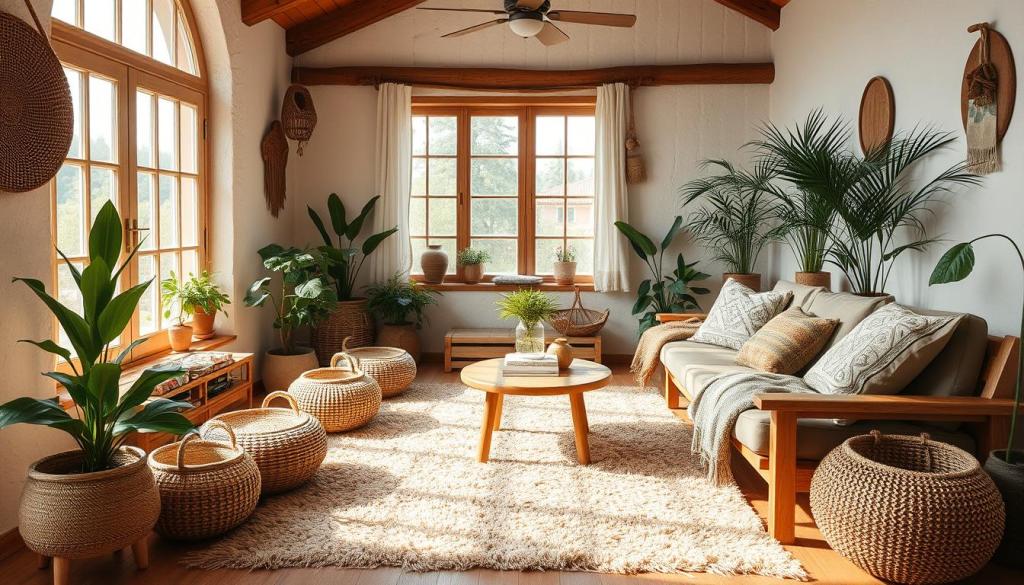
Sustainability has evolved from a distant concept to a powerful lifestyle choice in home design. Canadian homeowners are embracing eco-friendly interiors to create beautiful, responsible living spaces. They do this without breaking the bank.
Green home design is more than aesthetics; it’s a commitment to reducing environmental impact. It involves crafting stunning, functional spaces. Sustainable decor on a budget allows everyone to join this meaningful design revolution. It shows that style and ecological consciousness can perfectly coexist.
Modern interior design now understands that environmental responsibility doesn’t mean sacrificing visual appeal. With smart choices and creative strategies, Canadians can create stunning home environments. These environments reflect both personal taste and ecological awareness.
Key Takeaways
- Sustainable decor reduces environmental footprint
- Eco-friendly choices can be budget-friendly
- Green design supports local artisans and manufacturers
- Repurposing materials saves money and resources
- Sustainable interiors improve overall living quality
Understanding Sustainable Home Decor
Sustainable home decor is a revolutionary way to design spaces that honor both the environment and personal taste. It’s more than just looks; it’s about reducing ecological harm while creating stunning, eco-friendly interiors.
At the heart of sustainable interior design are several key principles:
- Using environmentally responsible materials
- Reducing carbon footprint through mindful choices
- Prioritizing long-lasting, quality products
- SHOP SOLID WOOD COAT RACK HERE
- SHOP WOOL BLANKET HERE
- SHOP IRON CAST COOKWARE HERE
- Supporting ethical manufacturing practices
Starting with eco-friendly materials is crucial for affordable sustainable decor. Look for wood products with the Forest Stewardship Council (FSC) certification. This ensures they come from sustainably managed forests. Recognized green certifications like ECOLOGO® and Greenguard also help identify sustainable options.
Indoor environments have a big impact on our health. The U.S. Environmental Protection Agency found that indoor volatile organic compounds (VOCs) can be 2 to 1,000 times higher than outdoors. Sustainable interior design tackles this by promoting low-VOC materials and natural finishes.
Creating an eco-friendly home is about making conscious choices that benefit both personal well-being and planetary health.
To bring sustainable home decor into your space, focus on products with low environmental impact. Choose renewable materials like bamboo and invest in quality pieces that last. By following these steps, you can create beautiful, responsible homes that showcase your style and commitment to the environment.
Natural and Sustainable Materials in Home Decor
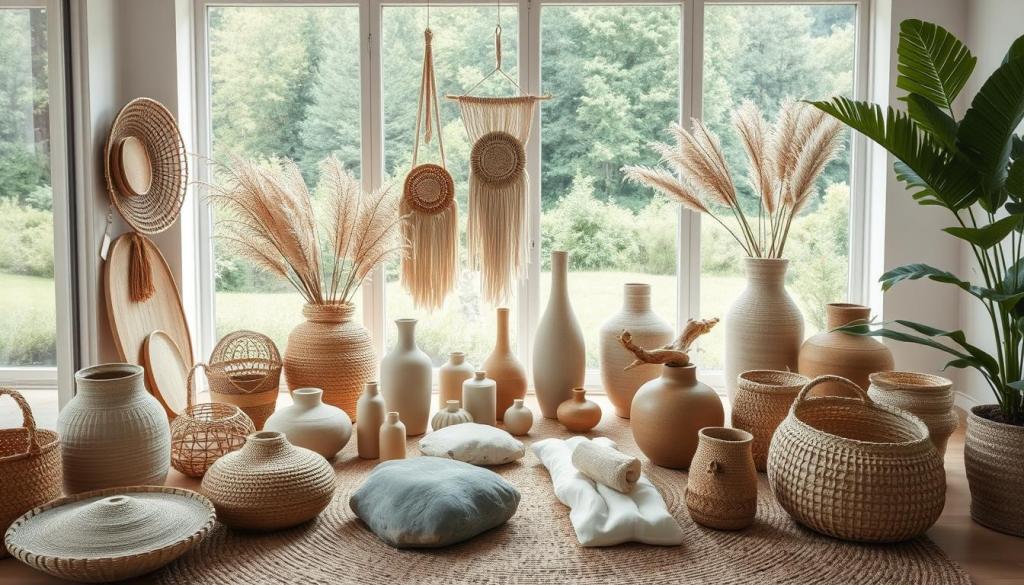
Transforming your living space with natural materials is now a key part of sustainable home design. Canadian homeowners are increasingly adopting eco-friendly approaches. These blend style with environmental consciousness.
Recycled home furnishings offer a wide range of options for creating beautiful, responsible living spaces. Here are key materials that make a significant impact:
- Reclaimed Wood: Sourced from old barns and demolished structures, this material brings unique character and reduces environmental waste
- Bamboo: A rapidly renewable resource that grows quickly and provides exceptional durability for furniture and flooring
- Cork: Biodegradable and versatile, perfect for wall coverings and decorative elements
- Jute: A natural fiber ideal for rugs, baskets, and textural home accessories
Research shows that 73% of consumers prefer sustainable products. The global sustainable home decor market is projected to reach $150 billion by 2025. By choosing natural materials, you’re not just decorating – you’re making a positive environmental statement.
Sustainable design isn’t just a trend – it’s a commitment to responsible living and preserving our planet’s resources.
When selecting materials, look for certifications from bodies like the Sustainable Furnishings Council (SFC) to ensure genuine eco-friendly credentials. Natural materials can reduce indoor VOC levels by up to 50%, creating healthier living environments.
Embrace the beauty of sustainable design by incorporating these natural materials into your home decor. Your space will not only look stunning but will also contribute to a more environmentally conscious lifestyle.
Eco-Friendly Interiors: Sustainable Decor on a Budget
Creating eco-friendly interiors doesn’t require a hefty budget. With smart strategies and creative thinking, sustainable decor can be affordable. Canadian homeowners can make environmentally conscious design choices without overspending.
Begin your sustainable home makeover with these budget-friendly tips:
- Thrift shopping for unique secondhand furniture
- Upcycling existing items into fresh decor pieces
- Choosing versatile, timeless design elements
- Investing in durable, multi-purpose furniture
Materials are key in eco-friendly interiors. Bamboo and reclaimed wood are sustainable, affordable, and stylish. They reduce environmental impact while enhancing your interior spaces.
Indoor plants are a cost-effective way to boost sustainable decor. They purify air, improve mental health, and add natural beauty. Snake plants or pothos are low-maintenance, budget-friendly options for eco-conscious decorators.
Sustainable living isn’t about spending more—it’s about making thoughtful choices that benefit both your wallet and the planet.
DIY projects can cut costs while creating unique eco-friendly interiors. Repurposing furniture, creating artwork from recycled materials, and using natural textiles are excellent budget-friendly options. They allow for sustainable decor without breaking the bank.
Upcycling and Repurposing for Home Decor
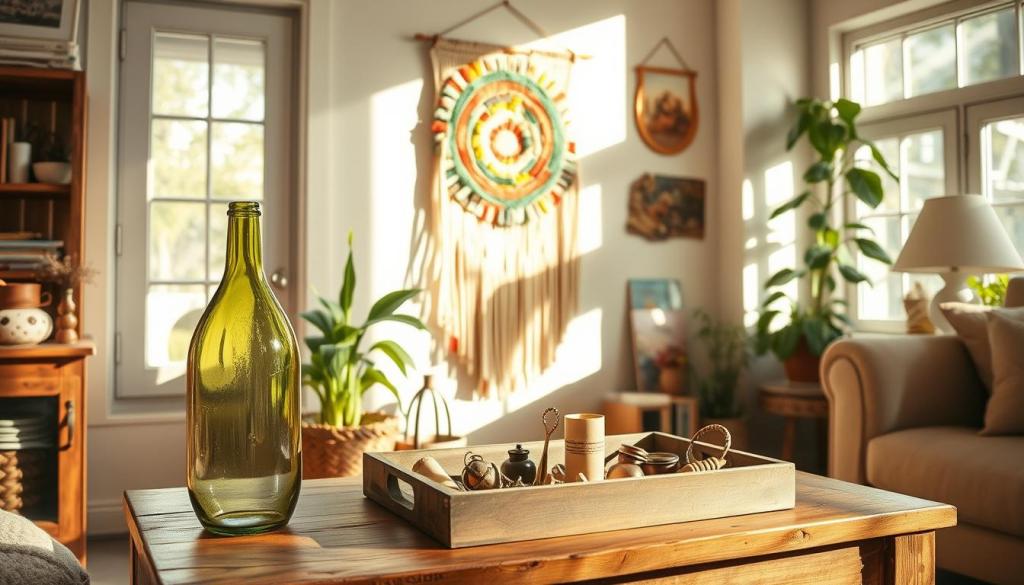
In a world where 99% of purchased items are discarded within six months, upcycling presents a sustainable, creative alternative to traditional home decorating. Recycled home furnishings are not only eco-friendly but also reflect personal style and environmental awareness.
“One person’s trash is another’s treasure” perfectly captures the essence of upcycling home accessories.
Turning old items into stunning decor pieces requires creativity and minimal investment. Here are some exciting ways to breathe new life into forgotten objects:
- Repurpose glass jars as elegant storage containers
- Convert wooden pallets into unique furniture
- Transform vintage suitcases into stylish side tables
- Revive old picture frames with fresh paint
The benefits of upcycled home accessories extend beyond aesthetics. By reimagining existing items, you can:
- Reduce waste
- Save money
- Create personalized decor
- Minimize environmental impact
With just a few hours and some creativity, you can transform discarded items into recycled home furnishings that tell a unique story. The upcycling market is projected to grow 15% annually, reflecting a growing trend towards sustainable design.
Whether you’re a DIY enthusiast or a design novice, upcycling offers an accessible path to creating a more sustainable, personalized living space.
Energy-Efficient Lighting and Sustainable Fixtures
Turning your home into an energy-efficient space begins with smart lighting choices. LED bulbs are a breakthrough in sustainable interior design, using up to 80% less energy than traditional bulbs. These innovative solutions not only cut down on electricity bills but also make your home more eco-friendly.
Homeowners can employ several strategies to enhance energy efficiency:
- Install motion sensors and smart lighting systems
- Use dimmable LED bulbs for flexible illumination
- Maximize natural light through strategic window treatments
- Choose light fixtures made from recycled or sustainable materials
Solar-powered lighting is another great choice for sustainable design. Outdoor solar string lights can completely eliminate the need for electricity for outdoor lighting. Indoor solar options are also becoming more common, offering eco-friendly alternatives that lower energy use.
Smart lighting isn’t just about saving energy—it’s about creating intelligent, responsive living spaces.
When picking lighting fixtures, consider the materials and manufacturing processes. Opt for products made from reclaimed wood, recycled metals, or sustainably sourced materials. These choices help reduce environmental impact and add unique character to your home.
It’s also important to remember the proper disposal of old bulbs and fixtures. Many retailers and local recycling centres have specialized electronic waste recycling programs. These ensure the responsible disposal of lighting equipment.
Indoor Plants and Natural Elements
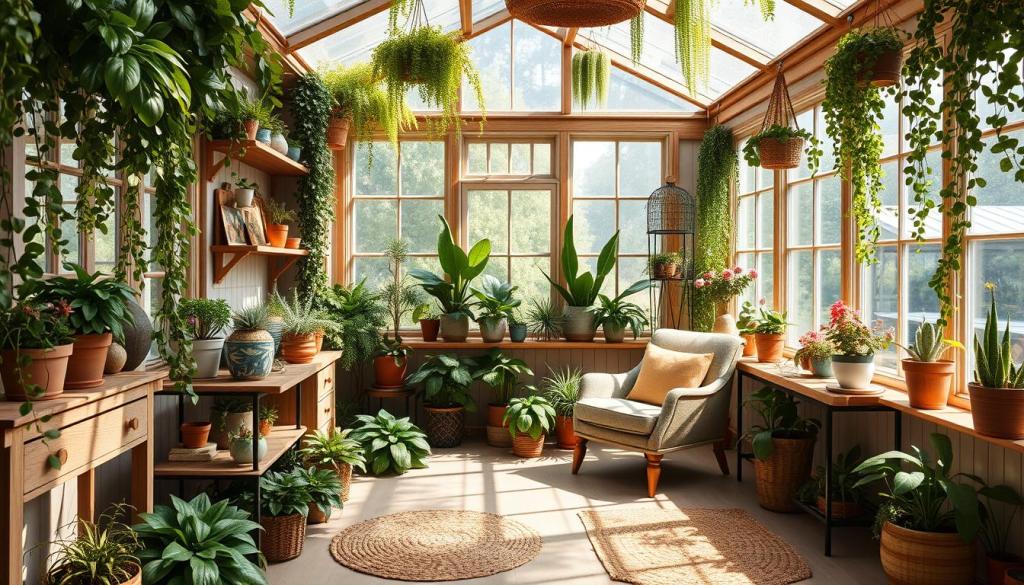
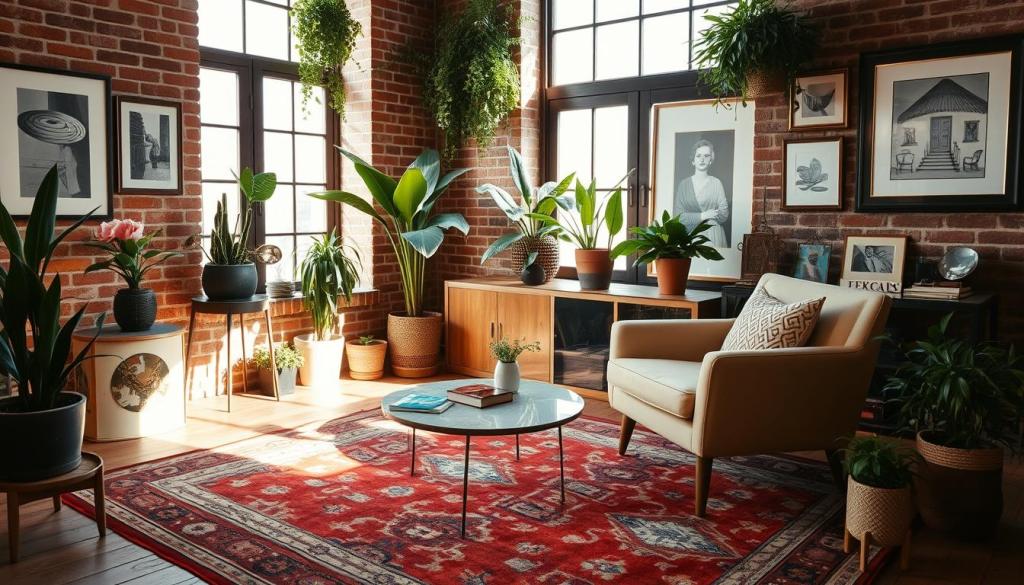
Transforming your living space with natural materials is now simpler than ever. Indoor plants are a key element in green home design, adding life and energy to any room. Studies indicate that about 70% of people find that plants significantly enhance their home’s atmosphere.
Choosing the right plants can greatly improve your living space. Here are some top air-purifying options:
- Snake plants: Excellent for filtering indoor pollutants
- Pothos: Thrives in low-light conditions
- Spider plants: Known for reducing indoor toxins
- Succulents: Low-maintenance green design solution
Biophilic design is more than just placing plants. Natural elements like wood, stone, and water features create a deeper connection to the environment. These materials not only enhance aesthetics but also reduce stress and increase productivity.
Bringing nature indoors is more than decoration—it’s about creating a healthier, more harmonious living space.
For those in urban areas with limited space, vertical gardens and compact herb gardens are excellent solutions. These green home design strategies can turn even the smallest apartment into a natural sanctuary.
Sustainable Textiles and Fabrics
Transforming your living space with sustainable textiles is a powerful way to embrace natural materials for interiors. The world of eco-friendly fabrics offers an exciting range of options. These combine style, comfort, and environmental responsibility.
When considering sustainable interior design, organic cotton and linen emerge as top choices for conscientious homeowners. These natural materials bring numerous benefits:
- Breathable and chemical-free fabrics
- Renewable and biodegradable materials
- Reduced environmental impact
- Improved indoor air quality
Certifications play a crucial role in identifying truly sustainable textiles. Look for labels like:
- Global Organic Textile Standard (GOTS)
- OEKO-TEX certification
- Fair Trade certifications
Statistics reveal a growing trend in sustainable textiles. 60% of consumers are willing to pay more for eco-friendly products. The market for sustainable fabrics is projected to increase by 40% in the next five years. This shows a significant shift towards environmentally conscious home decor.
Investing in quality natural textiles not only enhances your home’s aesthetic but also contributes to a more sustainable future.
Practical tips for incorporating sustainable textiles include choosing throw pillows made from organic cotton. Select linen curtains and opt for bedding that minimizes chemical treatments. By prioritizing natural materials for interiors, you can create a beautiful, environmentally responsible living space. This reflects your commitment to sustainable interior design.
Zero-Waste Decorating Approaches
Adopting zero-waste interior decorating turns homes into eco-friendly havens. It’s about making design choices that are both budget-friendly and environmentally conscious. This approach ensures homes are not only beautiful but also functional and sustainable.
Essential strategies for zero-waste decorating include:
- Choose multipurpose furniture that reduces the need for multiple items
- Select long-lasting, high-quality pieces over disposable trends
- Prioritize natural materials with minimal environmental footprint
- Implement creative upcycling techniques for existing decor
When selecting home decor, aim for items with minimal packaging. Seek out brands committed to sustainable practices. Look for those with recyclable packaging or supporting circular economy principles. Local artisan markets and secondhand stores are great for finding unique, eco-friendly decor.
Sustainable design isn’t just about appearance—it’s about creating spaces that respect our planet’s resources.
The mental benefits of zero-waste decorating go beyond just being good for the environment. It leads to simpler, more intentional spaces. These spaces reduce clutter, encourage mindfulness, and foster calm environments that boost overall well-being.
By embracing these zero-waste interior decorating strategies, Canadian homeowners can craft stunning, eco-friendly spaces. These spaces reflect personal style and a deep commitment to environmental consciousness.
Supporting Ethical and Local Artisans
Sustainable interior design transcends mere aesthetics. It’s about forging genuine connections with the minds behind your home’s decor. By backing local artisans, you’re not merely buying a product. You’re investing in your community’s creative heart.
Opting for handcrafted items brings several advantages for those who value eco-friendly living on a budget:
- It reduces carbon footprint by cutting down on emissions from transportation
- It boosts local economies and supports independent creators
- It secures unique, superior items with genuine craftsmanship
- It champions cultural preservation and traditional skills
Local craft markets and digital platforms are prime spots to find standout artisan-made decor. Fair trade certificationsserve as a beacon for authentic, ethically produced items. These ensure fair pay and sustainable practices.
Handcrafted items tell a story—each piece embodies the skill, passion, and cultural heritage of its creator.
Though artisanal pieces might appear pricier at first glance, their longevity and timeless appeal often justify the cost. Choosing sustainable, well-crafted decor means fewer replacements. It also enriches your home with deeper, more lasting meaning.
By championing local artisans, you’re not merely adorning your space. You’re embracing a more sustainable, interconnected approach to home design.
Creating Long-Term Sustainable Design
Sustainable interior design transcends fleeting trends. It’s about crafting enduring spaces through careful selection and planning. Green home design necessitates a strategic approach to materials, furniture, and decor that withstands time.
When designing a sustainable home, consider these essential strategies:
- Invest in high-quality, versatile furniture pieces
- Choose timeless design elements that transcend seasonal styles
- Select durable materials with minimal environmental impact
- Prioritize adaptable and modular design concepts
“Design for longevity, not for momentary trends.”
The core of sustainable interior design lies in creating spaces that remain both functional and aesthetically pleasing over the years. Sustainable materials such as cork, bamboo, and FSC-certified timber are excellent alternatives, reducing environmental impact. Given that people spend 90% of their lives indoors, making informed design choices is vital for both personal health and ecological stewardship.
Adopting slow design principles enables homeowners to create spaces that grow with them. Modular furniture offers flexibility, while opting for quality pieces reduces waste. Sustainable homes not only aid in environmental conservation but also lead to lower living costs and enhanced quality of life.
- Reduce waste through intentional design
- Select multipurpose furniture
- Maintain and care for existing pieces
- Consider long-term functionality
Creating a sustainable home is a commitment to personal comfort and global environmental health.
Conclusion
Your journey to green home design starts with recognizing sustainable decor as a lifestyle choice, not just a trend. By adopting eco-friendly interiors, you can revamp your living spaces and lessen environmental harm. Every choice, from energy-saving LED lights to reclaimed wood furniture, aids in preserving our planet.
Statistics highlight the power of sustainable design. Homes with energy-efficient features can see utility bills drop by 30% to 50% each year. Moreover, opting for non-toxic materials can cut indoor air pollutants by 60%. Today, 78% of consumers favor brands that show environmental responsibility, showing a rise in eco-awareness.
Even small actions can make a big difference. Upcycling materials can slash waste by up to 90%, and choosing local furniture can reduce carbon emissions by 60%. By embracing biophilic design, you can lower stress by 15% and boost well-being by 20%. This is more than decorating; it’s about creating a responsible, holistic living space.
Your sustainable design journey is a continuous exploration of creativity and positive change. Begin with small steps, stay curious, and observe how eco-friendly choices can elegantly transform your home. This supports our planet’s future.
FAQ
What exactly is sustainable home decor?
Sustainable home decor means picking design elements that are good for the planet. It’s about using eco-friendly materials, cutting down on waste, and supporting fair production. The goal is to make spaces that are stylish yet kind to the environment.
Can I create an eco-friendly home on a tight budget?
Yes, you can! Sustainable decor doesn’t have to cost a lot. Try thrift stores, upcycling, and DIY projects to save money. Many eco-friendly choices can even help you spend less over time.
What are some sustainable materials I can use in home decor?
Great choices include bamboo, reclaimed wood, organic cotton, cork, jute, and recycled materials. These options are good for the planet and last long. They also add interesting textures and character to your home.
How can I start incorporating sustainable decor into my home?
Start with small changes like adding plants, using energy-saving lights, and choosing second-hand furniture. Look for items made from natural or recycled materials. Focus on quality and replace items with greener options gradually.
What are the benefits of sustainable home decor?
Sustainable decor helps the environment, makes your home healthier, and supports fair production. It can also save you money and let you create a unique, personal space that shows your commitment to sustainability.
How do I identify truly sustainable home decor products?
Check for certifications like FSC, GOTS, and fair trade labels. Research brands’ green practices and material sources. Choose products with clear environmental credentials.
What is upcycling, and how can I use it in home decor?
Upcycling turns old items into new ones. You can make furniture from pallets, use glass jars for storage, or turn ladders into shelves. It’s a creative way to reuse and recycle.
Are sustainable home decor items as stylish as traditional options?
Yes, they are! Sustainable decor has become incredibly stylish. Eco-friendly pieces are often unique, innovative, and more visually appealing than mass-produced items. They help you create a distinctive space.
How can indoor plants contribute to sustainable home decor?
Indoor plants improve air quality, add beauty, reduce stress, and connect you with nature. They’re key in biophilic design. Use them in vertical gardens, herb collections, and strategic placements for air purification.
What is zero-waste decorating?
Zero-waste decorating aims to reduce waste by choosing items that serve multiple purposes, cutting down on packaging, and buying second-hand. It focuses on quality, function, and reducing consumption.




 Serene Sanctuary